How to set a folder view in Explorer for all folders. If you use the built- in file manager in Windows, Windows Explorer, you will realize that it has a feature to remember each folder's view setting.
Windows File Explorer defaults to a simple view of the files on your machine. You can change it to display details by default with a few steps. How do I get File.

Unfortunately, it is not explained very properly by Microsoft and some changes were made in modern Windows versions which make it even more confusing for end users. We constantly get this question asked by our readers - is there any way to make Windows Explorer set a desired view for all folders and then remember it? Let us explore how to do that. RECOMMENDED: Click here to fix Windows errors and optimize system performance. In Windows XP and earlier versions of Windows, you could open Folder Options from the Tools menu of Windows File Explorer, switch to the View tab and then click .
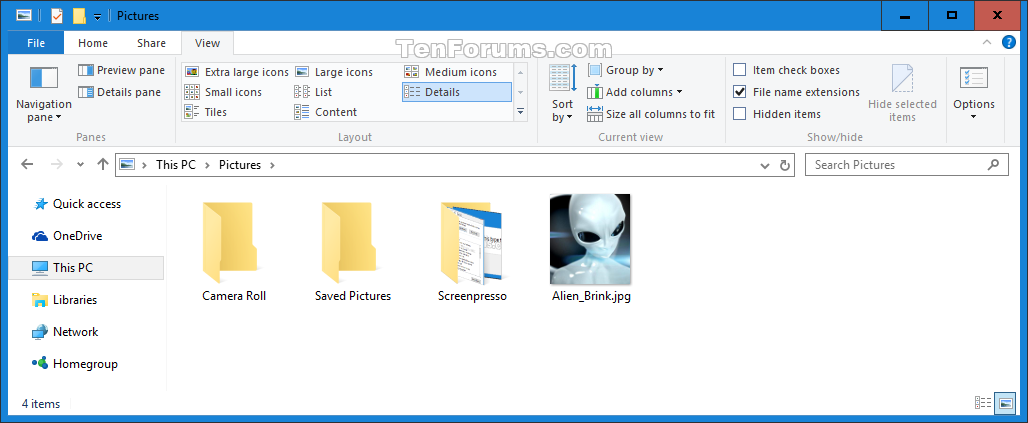
But in Windows 8. Windows 8, Windows 7 or Windows Vista, it is not so simple because Explorer now stores the view for each folder template separately. Windows Explorer has five folder templates - General Items, Documents, Pictures, Music and Videos.
When you see the Customize tab of a Library or of a folder, you will see these templates. This adds more flexibility to view your personal data. For instance, even if you prefer, say, List view for Documents, you may want your Music Library to be shown in Details view and you would want your Pictures and Video Libraries to be in icon- based views such as Medium, Large or Extra Large icons. So for each folder templates, Explorer stores it settings individually. Naturally, to change the view for all templates to the one you want, you need to do . I use List View for General items and Documents, Details View for Music, and Large Icons view for Pictures and Videos folders. Now you need to open Folder Options in each of these 5 Explorer windows.
Copy the font files (.ttf or.otf) to fonts:// in the File manager. Or: Go into the /home folder, in the menu select View > Show Hidden Files, you will see the hidden. Synchronize your Windows Mobile-based device with a Windows powered desktop PC. Microsoft ActiveSync 4.5 is the latest sync software release for Windows. Folder Size is a small but very useful shell extension designed to show folder size in Windows Explorer. While this tool shows the folder size right in Windows XP’s. Windows Server 2003, Windows Server 2003 SP1 and SP2, and Windows Server 2003 R2 retired content. The content you requested has already retired. It's available to.
On Windows 8. 1 and Windows 8's, Folder Options command is on the View tab of the Ribbon. On Windows 7 or if you disabled the Ribbon in Windows 8, press Alt+T on your keyboard to open the Tools menu and then open Folder Options. Tip: you can add the Folder Options button to Quick Access Toolbar. See the following article: How to add any ribbon command to the Quick Access toolbar of File Explorer in Windows 8. Folder Options Views. Switch to the View tab and click 'Apply to Folders'.
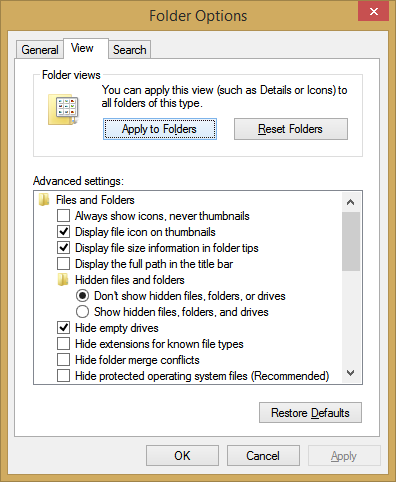
Doing this only affects the folders of one of the five templates - that is why you need to do this 5 times, for each of the above 5 folders. Now close all open windows in Windows Explorer and reopen them. You should have the desired view that you set. Alternatively, you can restart the Explorer shell to close all windows at once.
Note that despite setting these views, Explorer still remembers the views of individual folders that you change later after clicking . For example, if you set Pictures folder to Extra Large Icons and then clicked .
But if you were to change one of your specific folders containing Pictures to Medium icons, Explorer will remember that view for that particular folder. In addition, when you access any folders from their Libraries, the folders will always follow the parent library's view. So if you directly opened the My Documents folder at C: \Users\< your user name> \Documents, then it will show you the view you've set. But if you access the same folder from the Documents Library, it will show you in the view that you use for the Documents Library. Finally, special folders like Recycle Bin, This PC / Computer, Libraries have their own views which Explorer remembers.
So, now hopefully, the mystery of how Explorer determines which view to use for a folder will be a bit more clear to you and you won't be bewildered why suddenly Explorer decided to switch to another view.


/http%3A%2F%2Falbums.photoonweb.com%2Fphil%2Fforum_dma_vista%2Fdevmgr2.png)
/http%3A%2F%2Fxpdrivers.com%2Fresources%2Fsound_card_1.jpg)
/http%3A%2F%2Fimg10.deviantart.net%2F9018%2Fi%2F2011%2F180%2Fb%2F7%2Fadd_gpedit_msc_by_jwils876-d3kh6vm.jpg)
/http%3A%2F%2Fthewindowsclub.thewindowsclubco.netdna-cdn.com%2Fwp-content%2Fuploads%2F2010%2F06%2Fwindows-7-folder-with-background.png)