Enabling file sharing from a Windows 7 to Windows XP/Vista Machines. There have been many requests regarding how enable file/print sharing from XP to Windows 7 machines and vice versa. With this guide, I will explain how to do this as well as some main security settings you might need on your Windows 7 machine(these are necessarily needed but in the case of security, it would be a good idea to set them.) Since Windows Vista and XP machines are disallowed to join the “Home. Group” that is default in Windows 7, we will show you how to “get around” this issue so you can adequately share files from your Windows 7(from now on this will be referred to as W7 for brevity) machines to Legacy OS machines. First, we want to setup a workgroup that all of your machines are in; this will enable your W7 machines to see and transfer/receive files, folders, and printers to/from legacy OS machines. From W7 machines, you will need to right click on “Computer” in your start menu and click “properties” then click the link for “Advanced system settings. Again select the “Computer Name” tab and you can place yourself in the designated workgroup.
Download HP Photosmart 3200 All-in-One Printer Series Driver 13.1.0 for Windows 7. OS support: Windows 7. Category: Printers. Configure Windows Firewall settings for File and Printer Sharing with Windows XP Summary. The Windows Firewall blocks file and printer sharing by default.
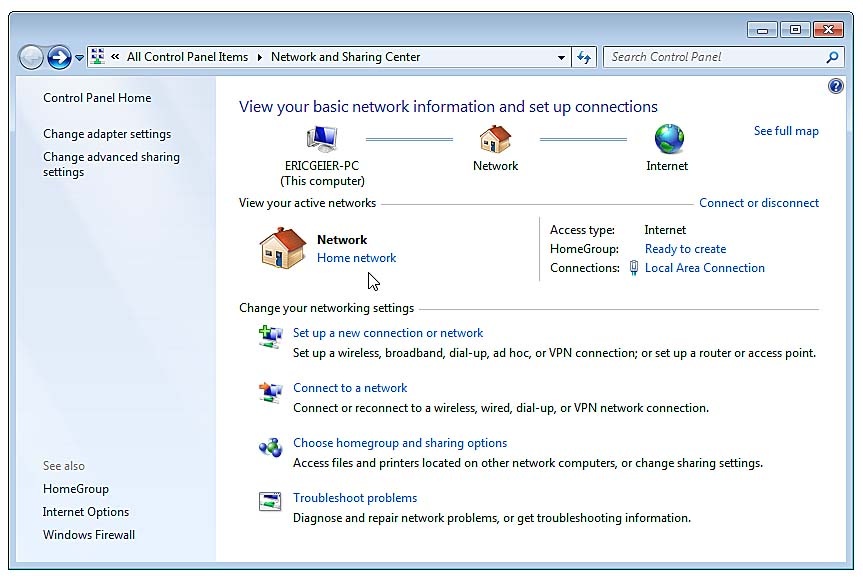
A reboot will be required. After you have setup the workgroup, on your W7 machine go to “Control Panel” then, “All Control Panel Items” then, “Network and Sharing Center” and finally click “Change advanced sharing settings.”Under the Home or Work (Current profile) dropdown, you will need to set a few things. Turn on Network Discovery. Turn on File and Print Sharing.
Turn on sharing so anyone with network access can read and write files in Public folders. Turn off password protected sharing (located in Advanced Sharing Settings at the bottom of the page)5. Click Save Changes. After you have done this, you should be able to go to your “Network” on your Computer Window (where it shows your directory; IE.

C Drive, D Drive, Documents, etc.) and see all the machines in your workgroup (or network.)Now let’s move onto Printer Sharing: From your Devices and Printers menu (in your start menu), Open the printer you want to share(right click and open or either double click.)Double click “Customize your Printer”. This will open a window; select the “Sharing” tab. Click on the “Share this printer” radio button and name your printer as well as click the “Render print jobs on client computers” radio button. If you have the XP OS x. Additional drivers button and select the x. Type 3 – User Mode button and make sure it says no.
For this guide, we will only focus on the following structure; Local computer Policy, then Computer Configuration then, Administrative Templates. Instead of “Computer Configuration\Administrative Templates\Windows Components\Windows Media Player” I will just put “Windows Components\Windows Media Player” for brevity and they are under the same structure.)Under \Windows Components\Event Log Service\Setup“Turn on logging “Set to enabled. This will enable logging for all events for security/auditing/troubleshooting purposes.
Under \System\Group Policy\Logging and tracing set the following: “Configure Network Shares preference logging and tracing”Set to enabled and turn tracing off. This allows you to log any errors or access to network shares.“Configure Drive maps preference logging and tracing”Set to enabled and turn tracing off. This allows you to log any errors or access to mapped drives.“Configure Files preference logging and tracing”Set to enabled and turn tracing off. This allows you to log any errors or access to files and their preferences.“Configure Folder options preference logging and tracing”Set to enabled and turn tracing off.
This allows you to log any errors or access to folder options and their preferences.“Configure Folders preference logging and tracing”Set to enabled and turn tracing off. This allows you to log any errors or access to folders and their preferences.“Configure Local Users and Groups preference logging and tracing”Set to enabled and turn tracing off. This allows you to log any errors or access to/by Local users and groups. Under \System\User Profiles, set: “Only allow local user profiles”Set to Enabled. This allows user to logon across the network and basically builds a roaming profile for any user that connects. This will save time in the future. Under \Windows Components\Windows Media Player set“Prevent Media Sharing”Set to disabled.
This allows your main computer file share to allow haring of all media files. Music mp. 3’s, videos, pictures, etc.)If you are using Bit. Locker on your W7 machine(which I recommend and this setting is only for W7 family)go to \Windows Components\Bit.
Download HP LaserJet 3055 All-in-One Printer Drivers for Windows 10, 8.1, 8, 7, Vista and XP 64 bit & 32 bit, fix HP LaserJet 3055 All-in-One Printer drivers problem.
Locker Drive Encryption\Fixed Data Drives“Configure use of passwords for fixed data drives”Set to enabled. This allows you to set a password for encrypted files such as expense reports, pictures, etc. Under \System“Do not automatically encrypt files moved to encrypted folders”Set to disabled. This will allow all legacy machines to load the printer drivers locally. Under \Network\Offline files“Exclude files from being cached”Set to enabled.
This disallows files to be cached on your local machine if you shared folder is disconnected. These next settings are just for users using RDP or Remote Desktop. Under \Windows Components\remote Desktop Services\Remote Desktop Session Host\Device and Resource Redirection“Do not allow drive redirection”Set to disabled. This allows for local drives to be automatically mapped via \\TSCLIENT\C$ (et. Do not allow supported Plug and Play device redirection”Set to disabled. This allows for Plug and Play devices to be automatically mapped via \\TSCLIENT\C$ (et.
Do not allow clipboard redirection”Set to disabled. This allows for the clipboard to be automatically mapped so you can copy/paste text, files, and folders to the remote machine. Under \Windows components\Remote Desktop Services\Remote Desktop Connection Client“Prompt for credentials on the client computer”Set to disabled. This allows you to not have to enter credentials every time on your local machine when going over the network. As a note, these settings are for more experienced users (like I said previously) and may decrease your security to some extent, but that is why it was shown how to log all content that happens through this process.
Additional Info: Windows Bulletin on File Sharing for Vista: http: //windows. US/windows- vista/Enable- file- and- printer- sharing. Another Windows bulletin on File Sharing: http: //technet. Article on GPEDIT. MSC and Group Policies: http: //vlaurie.


/http%3A%2F%2Falbums.photoonweb.com%2Fphil%2Fforum_dma_vista%2Fdevmgr2.png)
/http%3A%2F%2Fxpdrivers.com%2Fresources%2Fsound_card_1.jpg)
/http%3A%2F%2Fimg10.deviantart.net%2F9018%2Fi%2F2011%2F180%2Fb%2F7%2Fadd_gpedit_msc_by_jwils876-d3kh6vm.jpg)
/http%3A%2F%2Fthewindowsclub.thewindowsclubco.netdna-cdn.com%2Fwp-content%2Fuploads%2F2010%2F06%2Fwindows-7-folder-with-background.png)